
Google’s first Project Suncatcher prototype has reached orbit and made contact with its operators. Built with Planet and launched on SpaceX’s Transporter-18 mission on October 1, the satellite is operating as expected, Google said. The team plans to gather data over the coming weeks on how its AI chips respond to spaceflight, radiation and temperature.[1]
That is a significant step for a proposal whose appeal begins with sunlight: run computing hardware where solar energy is abundant, then send information back to Earth. A useful orbital data centre would have to turn that opportunity into dependable service. Power must reach the processors, heat must leave them, damaged calculations must be caught, and the machines must exchange enough information to keep working. Each part can change how much benefit remains from putting the hardware in space.[2][4][7]
The flight also has a precise place in the programme. Google’s September briefing says a two-satellite test is planned for 2027 to investigate the high-bandwidth laser connections needed between spacecraft. The prototype now in orbit begins with the behaviour of the computing hardware. A successful first mission would inform that later experiment; it would not establish that a fleet can operate as a competitive AI service.[2]
A computer that must keep earning its power
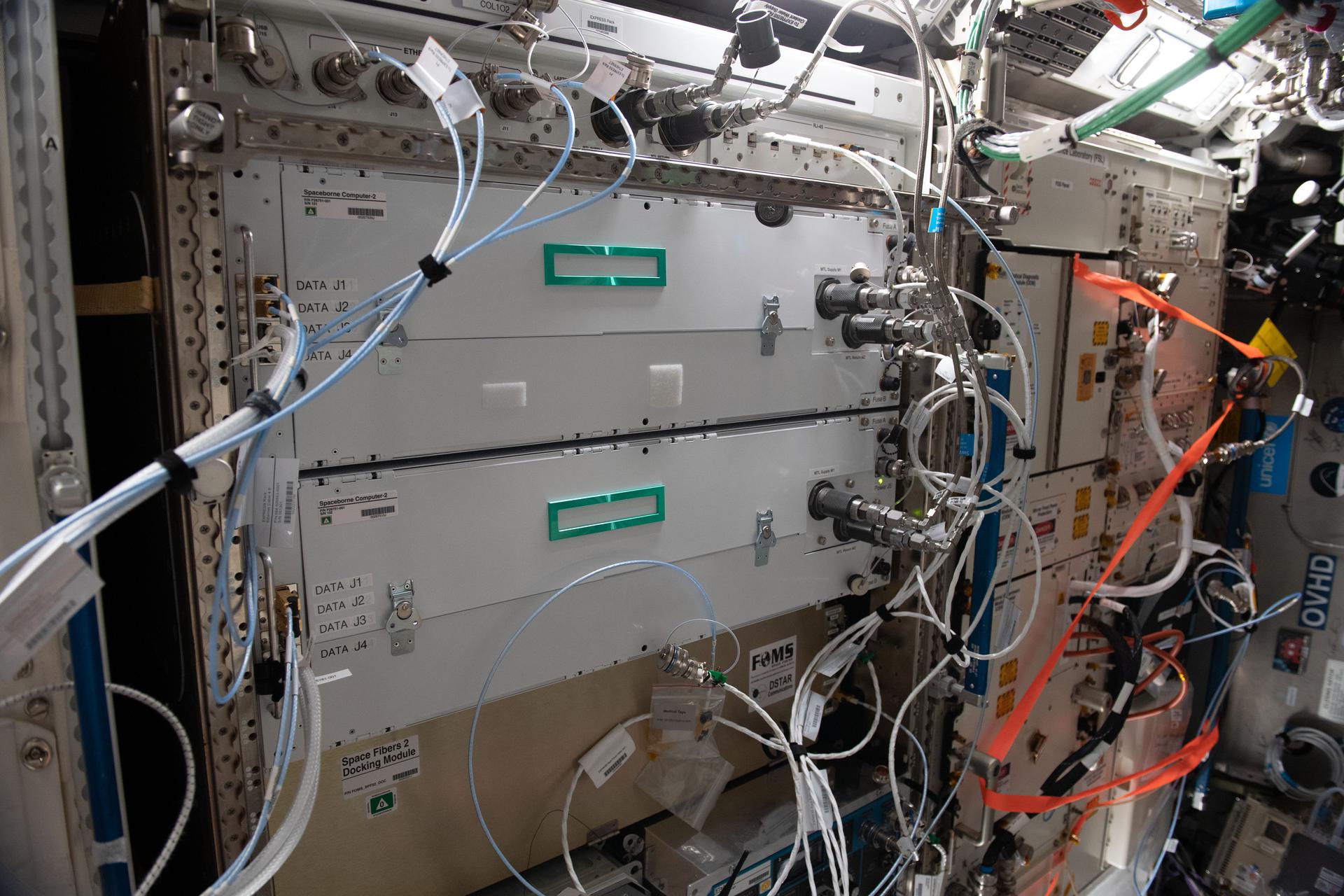
There is already experience to build on. In 2017, Hewlett Packard Enterprise sent a commercial high-performance computer to the International Space Station. NASA’s account says Spaceborne Computer-1 worked throughout its mission of more than a year and a half. The approach relied on software that monitored the machine and slowed it when behaviour departed from normal conditions. NASA’s Rupak Biswas described the underlying aim as using software to correct errors while retaining relatively recent processors. This offered a route around the long development cycles of traditionally hardened equipment.[6]
That precedent is encouraging, with a substantial qualification for any comparison. The station supplies a host environment and services. A free-flying satellite must carry its own power, thermal management, communications and means of staying in the intended orbit. Moving from a working computer to a working spacecraft therefore adds an entire set of dependencies. And a commercial service would eventually be judged by the amount of useful computing it completes through interruptions, degradation and recovery, as well as by whether its electronics remain alive.[6][4]
Radiation introduces several different ways for a computer to go wrong. NASA’s radiation engineers distinguish a particle strike that immediately changes a circuit’s behaviour from accumulated exposure that gradually degrades components. An upset can corrupt data or crash a programme; some events can cause permanent damage. The environment also varies with orbit and solar activity, which is why tests begin with the destination and the intended mission duration. Shielding helps, but adds weight. The engineering task is to establish what protection the particular hardware needs and which failures the whole system can handle.[5]
Google’s June engineering manuscript reports that Trillium TPUs survived a simulated five-year radiation dose for the target orbit without permanent failure. It also identifies silent data corruption during AI workloads and says the implications for training need further study. Elsewhere, the same study reports an 800-gigabit-per-second, one-way optical demonstration on a laboratory bench. These results support doing a flight test; they are different kinds of evidence from long-running operations in orbit. The manuscript also projects a possible path to launch prices around $200 per kilogram in the mid-2030s, conditional on future industry progress. That is a cost scenario, not a price established by this launch.[3]
NASA’s Engineering and Safety Center makes a further point that matters to this experiment: radiation tolerance is not a single property that a part either possesses or lacks. Even a specially hardened component can remain susceptible to some effects. The relevant combination includes the mission, exposure, application and lifetime. Protection can be designed at several levels, from an individual device to the complete system. For a computing operator, this implies testing the recovery process alongside the fault: whether the error is detected, whether the affected work can be repeated, and how much capacity recovery consumes.[7]
The route from hot silicon to space
Cooling gives the satellite a second continuous job. Within the spacecraft, heat can travel through solid connections or a thermal transport system. At its boundary with the surrounding vacuum, it must be radiated away. There is no outside air to carry it off. NASA’s small-spacecraft engineering guide treats the result as an energy balance: internal heat and absorbed sunlight or planetary radiation must be matched by heat rejection or a change in the spacecraft’s temperature. Radiator area, surface properties and temperature all enter that balance. Cold surroundings alone do not specify how much computing a spacecraft can sustain.[4]
Google says it has tested a system using heat pipes and radiators in a thermal vacuum chamber. The flight will provide experience with that cooling approach in space. Its value should be read in terms of operating conditions: the workload, its duration and the temperatures reached.[2]
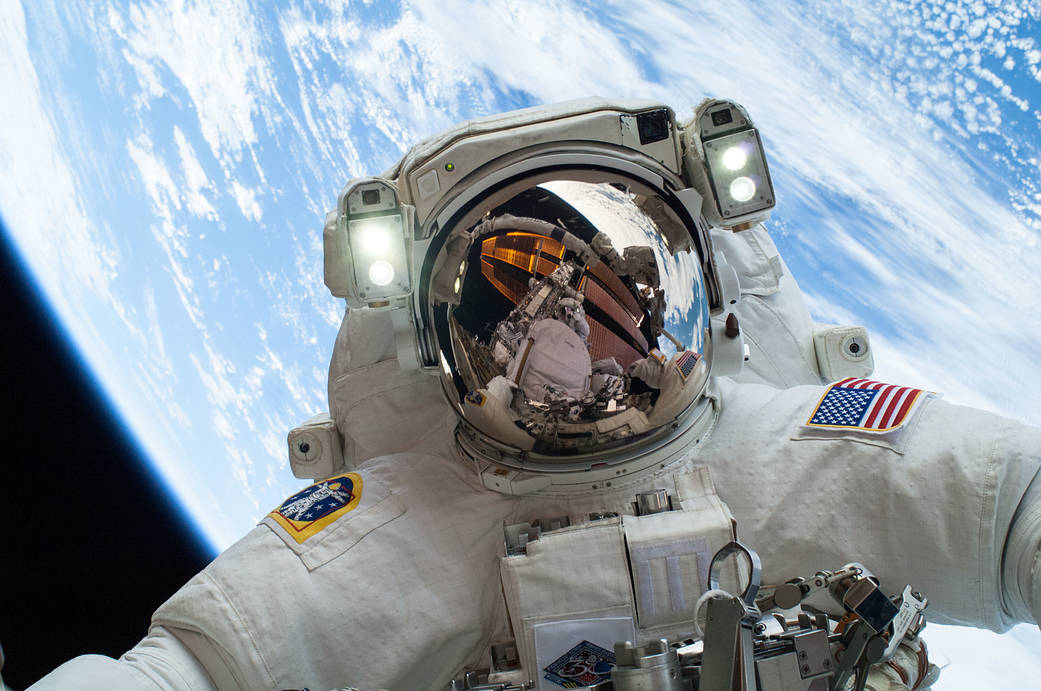
Image details
Original aspect ratio; no crop or generative alteration.
The space station offers a physical example of what sustained cooling entails. In December 2013, astronauts Mike Hopkins and Rick Mastracchio made two spacewalks to replace a faulty pump module. NASA’s account explains that the module controls ammonia flowing through external cooling loops and radiators; water-based loops inside the station help carry excess heat out to them. The repair connects a familiar computing requirement to a distinctly orbital difficulty. A cooling component can become a maintenance problem in a place where reaching it requires an extravehicular mission.[16]
A free-flying computing fleet would need its own answer to that problem. The design might tolerate a failed unit by shifting work elsewhere, or reserve spare capacity from the outset. Either choice belongs in the performance and cost comparison. Hardware carried as a spare occupies mass and consumes part of the budget even when it is doing no productive work. That means reliability belongs in the power calculation, because it changes how much useful computation the installed equipment can deliver.[4][7][16]
Making separate spacecraft behave like one machine
The communications challenge becomes clearer by looking at how Google’s terrestrial systems divide work. Its Cloud TPU documentation describes fast links connecting chips within a group, with a separate data-centre network connecting groups. Choosing how to distribute a model changes the traffic those networks must carry. The guidance warns that some ways of splitting the work demand too much bandwidth between groups. A strategy that reduces memory pressure can increase communication and the chance of waiting for a delayed operation. These trade-offs exist even before the network is moved into orbit.[8]
For the planned paired mission, a peak transmission rate will describe only part of the result. Engineers will also need to know how often the link is available, how errors are handled and how much time processors spend waiting. The workload will determine whether the connection is sufficient.[8]
There is convincing flight evidence that very fast laser links are possible. The team behind NASA’s TeraByte Infrared Delivery mission, TBIRD, reported a 200-gigabit-per-second downlink and delivery of as much as 4.8 terabytes without errors during a five-minute pass. Its 2023 conference report describes commercial optical transceivers combined with a protocol that requests retransmission when needed. The design addressed a link whose strength varied as light passed through the atmosphere. Compensation for relative motion also increased the amount of data delivered in a pass.[9]
The emphasis on a completed transfer matters. A useful connection is measured by data that arrives intact within the available contact, including the cost of recovering losses. TBIRD demonstrated this in a real orbital setting. It did so between a small satellite and Earth, for a particular experimental mission. That gives designers a tested method to learn from without establishing the performance of a future network between many AI satellites.[9]
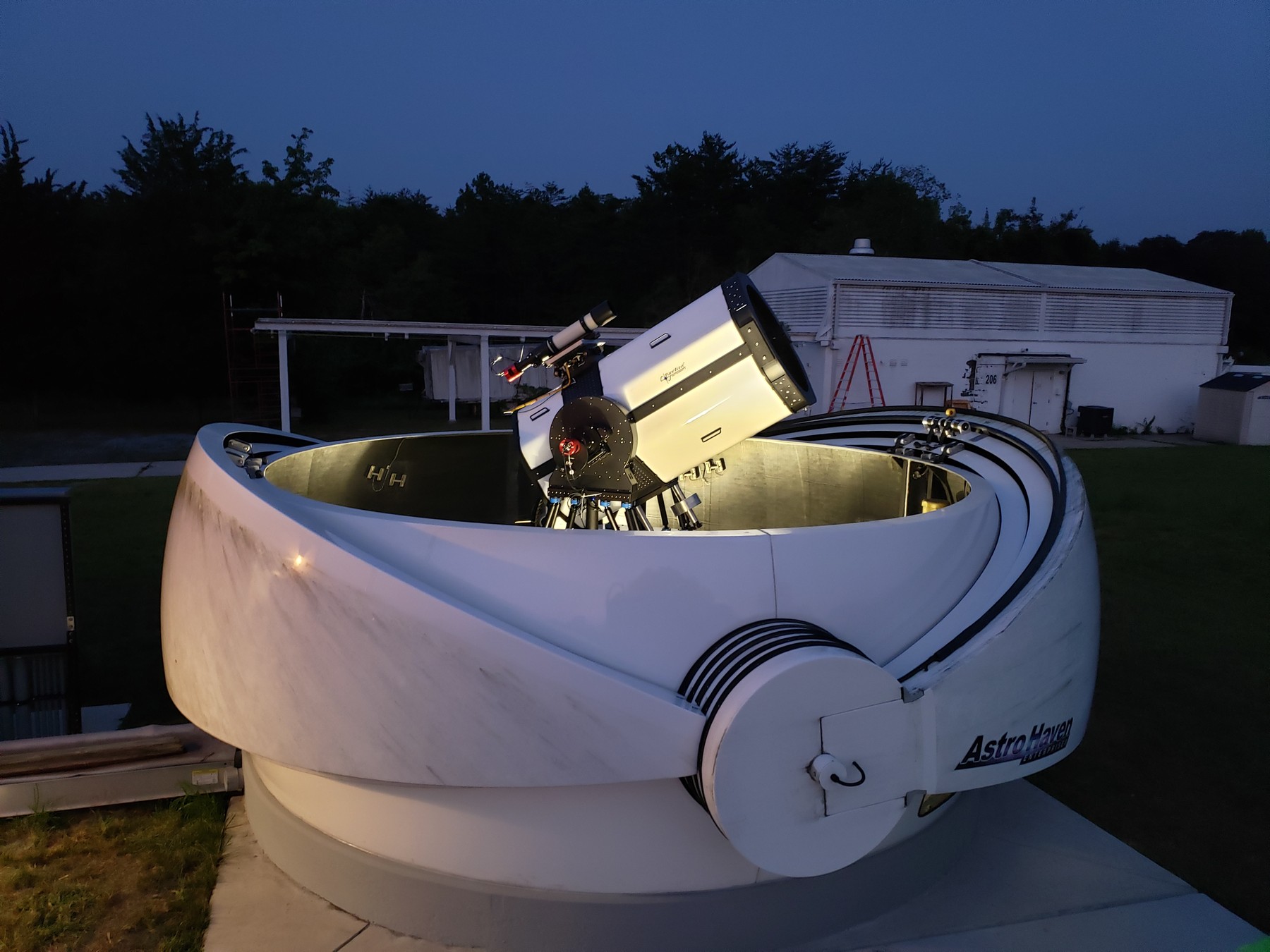
Image details
Proportionally resized from 4032 × 3024 to 1800 × 1350; no crop or generative alteration.
NASA’s later work also shows the ground end developing. In a test reported in October 2024, its Low-Cost Optical Terminal established a beacon connection with TBIRD for more than three minutes. The terminal uses modified commercial hardware, an effort to make this infrastructure more accessible. The article records that TBIRD’s mission had ended in September 2024, so this is an earlier engineering precedent, not a satellite operating alongside Suncatcher today.[11]
A ground-facing optical service must also contend with the atmosphere. NASA identifies clouds and precise pointing as central challenges for laser communications. Those constraints raise a different question from whether two nearby spacecraft can exchange data: how consistently can customers reach the computing capacity from the locations where it is useful? Multiple ground sites, routing and the ability to hold work until contact is available could help, but their effect would depend on the eventual service design. Any claim about availability needs to include that ground network and its weather exposure.[10]
Which work belongs up there?
One earlier application offers a more immediate reason to compute in orbit. HPE’s account of Spaceborne Computer-2 describes a March 2022 example involving 2.8 gigabytes of life-sciences data. Sending that material down through the available connection took roughly 18 hours. Processing it onboard produced a 92-kilobyte results file that could be transmitted in about two seconds. These are company-reported figures from that case, with a specific workload and communications setup. They demonstrate why processing data near where it originates can change the amount that needs to travel.[12]
That example suggests a way to separate two possible markets. Instruments and crews already in space may benefit from local analysis because their raw data is there. An orbital service doing work for users on Earth must account for moving inputs up and results down. Which is attractive depends on the task, including the volume of input, the size of the answer and the acceptable delay.[12]
There is a substantial reason to explore alternatives to terrestrial infrastructure. The International Energy Agency’s 2025 base case projected global data-centre electricity demand of about 945 terawatt-hours in 2030. It also stressed uncertainty and local concentration: a relatively limited share of worldwide electricity demand can still create difficult demands on particular grids. But the same assessment included a high-efficiency case, in which improvements in software, hardware and infrastructure serve comparable demand with less electricity. By the time an orbital system reaches commercial scale, the ground-based system it competes with will have changed too.[13]
The comparison therefore needs the cost of a completed task over an operating life. Solar panels, cooling equipment, communications, spacecraft manufacture and replacement all matter alongside launch. The evidence available from this first announcement cannot supply that answer. A cheaper launch could make an ambitious design possible while leaving it expensive to operate; better terrestrial efficiency could move the competitive threshold in the other direction. These are the variables a convincing later demonstration would need to bring together, with clearly stated assumptions about utilisation and service life.[3][13][14]
Environmental accounting has a similar boundary. The European ASCEND feasibility study, led by Thales Alenia Space, examined orbital data centres and reported its conclusions in 2024. Its announcement said a substantial reduction in emissions would require a launcher with a lifecycle footprint ten times lower. The study also identified avoiding water for cooling as an advantage. That is a conditional environmental proposition, including how the system reaches orbit. Sunlight during operation is only one part of the assessment; the launch and replacement hardware must be counted as well.[14]
Orbit itself imposes shared costs. ESA’s 2026 Space Environment Report warns that debris can continue increasing through collisions even without additional launches. It calls for dependable disposal at the end of a mission and active removal alongside prevention. For a prospective computing constellation, that makes the retirement plan part of the design from the beginning. A satellite that has stopped doing useful work still occupies an orbit. Scaling up would require showing how failed as well as healthy spacecraft leave it, and how the fleet responds to other objects while operating.[15]
The first Suncatcher flight can begin supplying the evidence that makes these choices less speculative. Useful results would connect a stated workload to temperatures, detected errors, recovery time and delivered output. The planned paired mission could then address how work performs across a moving optical connection. Beyond those experiments lies the full service: power, cooling, networking, replacement and retirement working together for long enough to justify their cost.[1][2][7][15]
Sources & further reading
Original reporting and research behind this article.
- Google: the Suncatcher prototype is in orbitSource dated 2026-10-01; checked October 3, 2026
- Google: the first test and the planned 2027 pairSource dated 2026-09-24; checked October 3, 2026
- Suncatcher engineering study, June 2026 manuscriptSource dated 2026-06-17; checked October 3, 2026
- NASA: small-spacecraft thermal controlSource dated 2026-05-07; checked October 3, 2026
- NASA: preparing electronics for space radiationOriginally published June 10, 2019; updated January 30, 2026; checked October 3, 2026
- NASA: Spaceborne Computer and software protectionSource dated 2025-02-11; checked October 3, 2026
- NASA Engineering and Safety Center: single-event risksSource dated 2021-12-03; checked October 3, 2026
- Google Cloud: training across TPU sliceschecked October 3, 2026
- TBIRD team: 200-Gbps orbital results and error recoverychecked October 3, 2026
- NASA: optical communications and atmospheric limitschecked October 3, 2026
- NASA: a ground terminal connects to TBIRDSource dated 2024-10-09; checked October 3, 2026
- HPE: Spaceborne Computer-2 experience and workloadsSource dated 2024-01-30; checked October 3, 2026
- IEA: data-centre electricity demand scenarioschecked October 3, 2026
- ASCEND: orbital data-centre life-cycle feasibilitySource dated 2024-06-27; checked October 3, 2026
- ESA: 2026 space environment reportSource dated 2026-09-14; checked October 3, 2026
- NASA: repairing the station cooling systemSource dated 2013-12-27; checked October 3, 2026
- NASA: Spaceborne Computer-2 photographchecked October 3, 2026
THE DAYBREAK / THE MORNING LETTER
A little more understanding,
every morning.
The day’s selected stories, the context behind them, and a deeper read. A considered start to your day, delivered to your inbox.
See what’s inside