
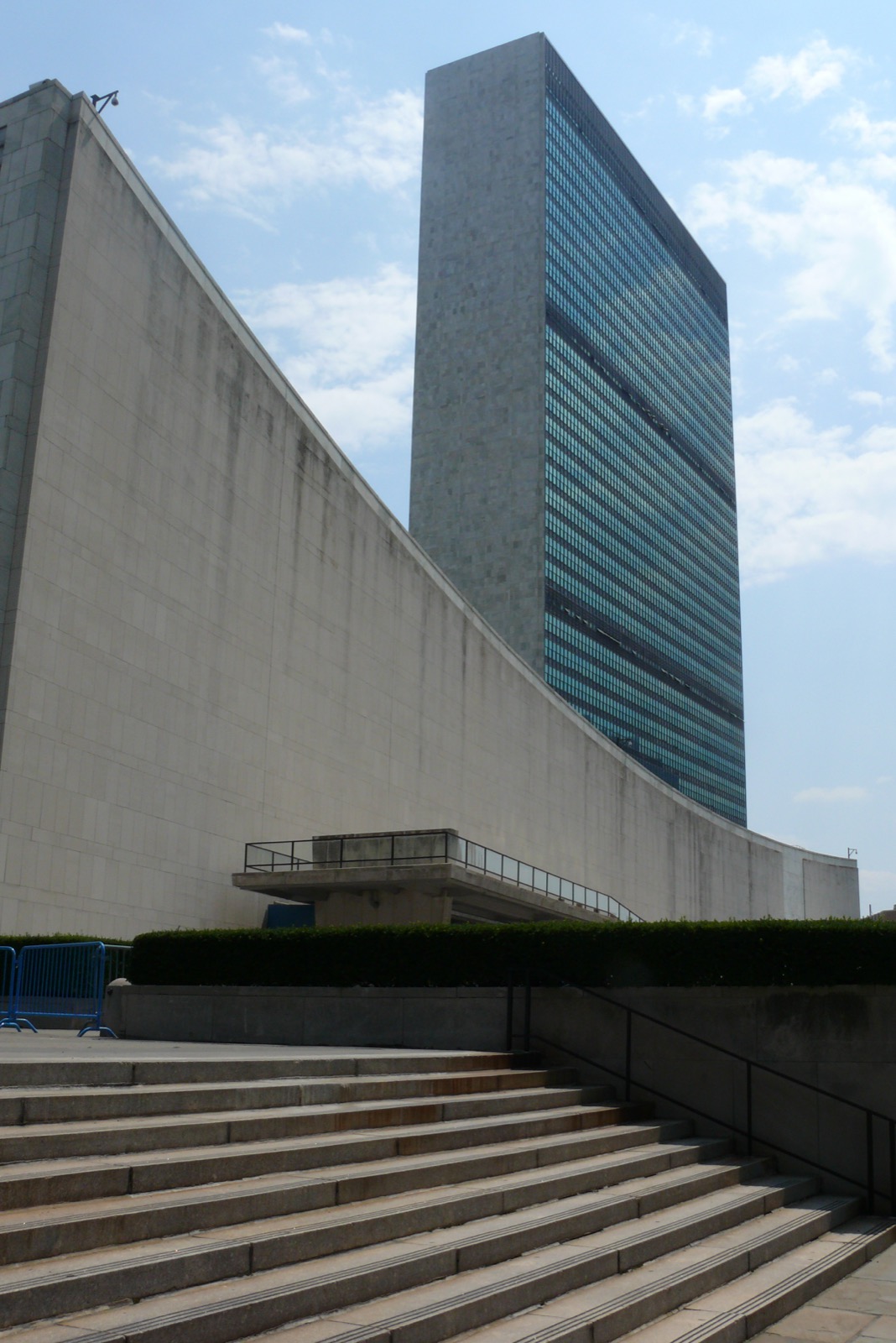
At the United Nations on September 25, the European Union backed stronger pandemic preparedness while objecting to parts of the declaration before the meeting. Its concerns included how medical technology should be shared and international financing commitments framed.[2]
The World Health Organization’s account described a declaration still under consideration, expected to go to the General Assembly for further consideration. It also identified a separate unfinished task: completing the pathogen-sharing annex needed to move the WHO Pandemic Agreement toward national ratification. Neither step was reported as completed in its September 25 account.[1]
These separate instruments address different questions: who must report a warning, who shares a sample, and how medical products become available. For patients awaiting protection or treatment, those distinctions have practical consequences.[3][8]
- Political declaration: under consideration in WHO’s September 25 account.
- International Health Regulations: existing legal duties, with amendments that began taking effect in 2025.
- Pandemic Agreement: adopted text; an unfinished annex precedes signature and national ratification.
What the existing rules already require
The International Health Regulations already establish legal obligations concerning health threats that can cross borders. Countries must maintain surveillance and response capacities, report relevant events to WHO and verify information about possible risks. WHO, in turn, maintains an international early-warning function and coordinates response. These duties exist independently of the declaration discussed in New York.[3]
The regulations also connect health protection to the ordinary movement of people and goods. They cover matters such as health documents for international travelers and include safeguards concerning personal information, consent and discrimination. Their stated purpose combines controlling international disease spread with avoiding unnecessary interference in traffic and trade. Preparedness therefore involves decisions at ports and airports as well as hospitals and laboratories.[3]
Amendments adopted in 2024 began entering into force in September 2025. They introduced a new alert category, a pandemic emergency, and national authorities responsible for coordinating implementation. They also strengthened provisions concerning access to medical products and financing. Those are changes to an existing framework, rather than powers created by this week’s meeting.[4]
The amended rules do not apply identically everywhere. WHO’s entry-into-force announcement explained that states rejecting the amendments remained subject to earlier versions. It also emphasized that WHO serves as the regulations’ secretariat and cannot compel countries to act. A common framework still depends on national implementation.[4]
The unfinished exchange at the center of the agreement
The Pandemic Agreement follows a different path. The World Health Assembly adopted its text in May 2025, but the accompanying resolution says it opens for signature only after adoption of the pathogen-access annex. National approval and entry into force are further stages. Adopting the text was an important step without completing that process.[5]
The annex concerns an exchange with direct consequences for scientific research and medical access. Countries and laboratories would share materials and genetic sequence information from pathogens with pandemic potential. Benefits from using them—including vaccines, treatments and tests—would also be shared. WHO’s September 18 account of the latest negotiating meeting described progress toward an equitable, workable system, while making clear that negotiations continued.[6]
Putting those two flows together is the central idea. Sharing a pathogen helps researchers investigate it; sharing the resulting products is intended to make the scientific contribution useful to people who need protection. The proposed system treats both sides as responsibilities to be worked out together. A promise to exchange information alone would not answer the separate question of access to the products developed from it.[6]
The adopted agreement gives that ambition a specific form. During a pandemic emergency, participating manufacturers would provide WHO with rapid access targeting 20 percent of their real-time production of relevant vaccines, treatments and diagnostics, through binding contracts. At least 10 percent would be donated; the remaining share would be reserved at affordable prices, with flexibility reflecting each manufacturer’s nature and capacity. These provisions describe the planned system, not a currently available stockpile or a guarantee that every manufacturer participates.[5]
National authority remains central to implementation. WHO’s explanation of the agreement says countries would integrate its goals into their own plans and policies through their constitutional processes. The organization would provide technical assistance and help cooperation. The agreement does not authorize WHO to impose lockdowns or vaccine mandates. Its wider scope includes health workers, research, local production and supply chains; finishing the annex is an essential step toward implementing that broader framework.[7]
Where the European objections land
The EU said technology transfer must remain voluntary and mutually agreed. It also wanted financing commitments to use current estimates and respect decision-making in different jurisdictions. Its statement regretted the absence of a global financial tracker and a reference to WHO’s pandemic intelligence hub. At the same time, it welcomed national preparedness planning and support for institutions such as the Pandemic Fund.[2]
The EU supports cooperation but disputes elements of the proposed approach. It also states that the declaration cannot alter either the International Health Regulations or the Pandemic Agreement. Political commitments and those instruments’ legal provisions therefore need to be assessed separately.[2]
What preparedness looks like before an emergency
A Caribbean project shows some of the practical work that financing supports. CARPHA, the regional public health agency, describes a Pandemic Fund project connecting early-warning systems, laboratories, workforce training and coordination. Its laboratory component includes specimen transport arrangements with carriers and courier networks, alongside testing capacity, reagents and safe-shipping training. A capable laboratory is of limited use if the sample cannot reach it safely and promptly.[8]
The project also brings professions together before an outbreak forces them to collaborate. CARPHA reports that a September 8–9 workshop in Barbados brought public-health and vector-control professionals together with meteorological services and technical partners to work on using climate information in disease preparedness. It is a concrete example of the coordination being financed.[8]
Early warning also requires interpreting information already in circulation. WHO’s Epidemic Intelligence from Open Sources initiative collects public information to help specialists detect and assess health threats. Developed through collaboration with the European Commission’s Joint Research Centre, it combines a technical system with a network of users and collaborators. WHO says 120 countries and thirty organizations and networks were using it by the end of 2025.[9]
Its purpose is to give experts time to assess a possible threat and decide what to do. That depends on people who can distinguish a useful signal from an alarming report, as well as institutions able to respond.[9]
WHO’s September 25 account points to the World Health Assembly in May 2027 for adoption of the annex. That remains a step to be completed.[1]
The agreement would then open for signature. Entry into force follows thirty days after sixty formal instruments of ratification, acceptance, approval, formal confirmation or accession have been deposited. Those are the next legal stages, beyond agreement on the text.[5]
Sources & further reading
Original reporting and research behind this article.
- WHO account of the September 25 pandemic meetingPublished 2026-09-25
- EU statement at the pandemic preparedness meetingPublished 2026-09-25
- International Health Regulations: current overviewUndated; accessed September 27, 2026
- Amended International Health Regulations enter into forcePublished 2025-09-19
- WHO Pandemic Agreement — adopted text and resolutionPublished 2025-05-20
- September 18 pathogen-access negotiations updatePublished 2026-09-18
- WHO Pandemic Agreement: implementation and national authorityUndated; accessed September 27, 2026
- CARPHA Pandemic Fund project: components and activitiesUndated; accessed September 27, 2026
- Epidemic Intelligence from Open Sources initiativeUndated; accessed September 27, 2026
THE DAYBREAK / THE MORNING LETTER
A little more understanding,
every morning.
The day’s selected stories, the context behind them, and a deeper read. A considered start to your day, delivered to your inbox.
See what’s inside