
NASA’s Neil Gehrels Swift Observatory can once again turn toward sudden explosions in the sky without waiting for instructions from Earth. In a September 25 update, the mission reported that its Burst Alert Telescope was detecting gamma rays again and that automatic pointing had resumed. The recovery restores a central part of Swift’s work while its orbit continues to fall.[1]
The observatory was around 325 kilometers above Earth in that report. Below about 300 kilometers, operations become more difficult and science observations are likely to stop. The team estimates it will reach that threshold in early to mid-October. That is an estimate of an operational limit, not a scheduled date for atmospheric reentry.[1]
Catching the fading aftermath
Swift was built to connect a brief alert with a much closer look. Its wide-field Burst Alert Telescope locates a gamma-ray burst and transmits the position to the ground. The spacecraft can then turn within 20 to 100 seconds, bringing its narrower X-ray and ultraviolet/optical telescopes onto the source. Those instruments follow the fading aftermath at wavelengths that reveal different parts of the event. Astronomers elsewhere receive the location through an alert network and can begin their own observations.[2]
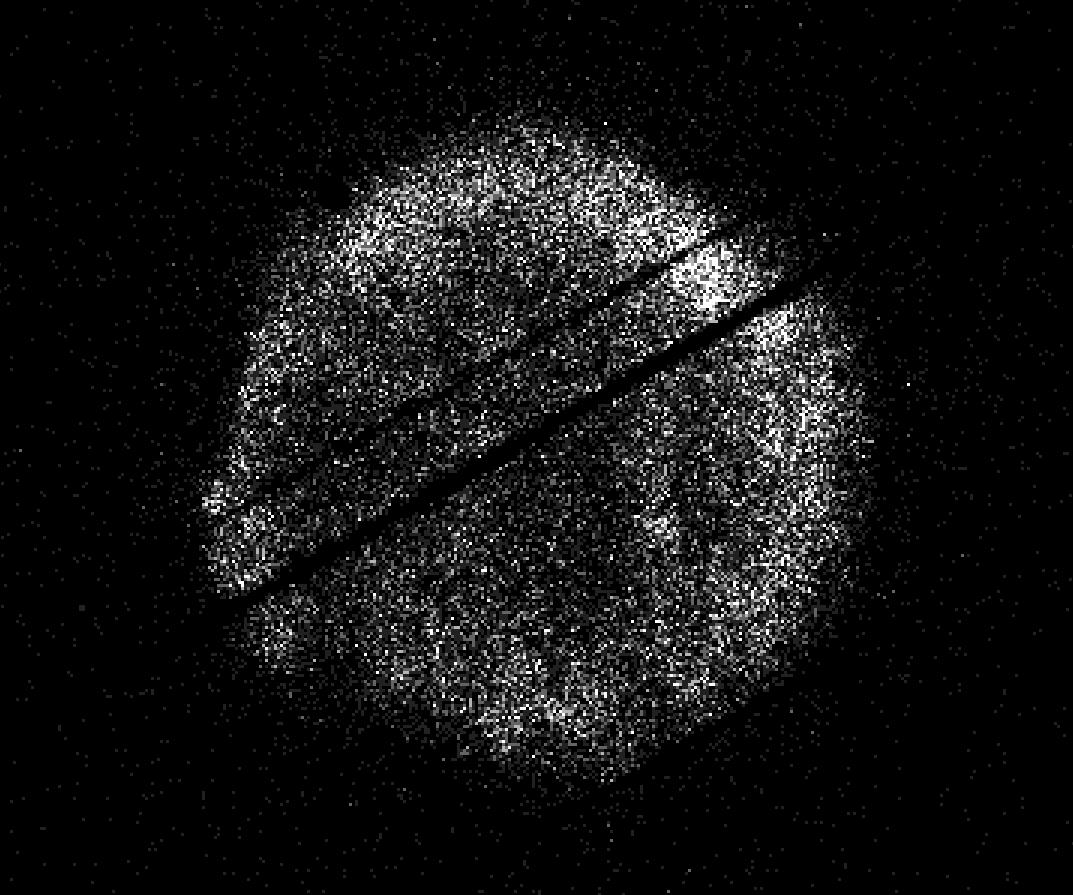
Two instruments had already returned on August 26. An X-ray image taken that day shows the roughly circular shell of Tycho’s supernova remnant as a concentration of detected photons. Dark streaks cutting through the picture are imaging artifacts. The image records an actual observation after months with the telescope switched off, part of the earlier restart of X-ray and ultraviolet/optical work.[7]
The gamma-ray detector was confirmed calibrated and operating on September 18. Automatic pointing followed on September 21, completing the return of the observatory’s rapid follow-up sequence.[1]
The cost of pointing
Observing the sky and preserving altitude had become competing uses of the same spacecraft. In February, controllers suspended most science so they could hold Swift in an orientation that encountered less atmospheric resistance. Even hundreds of kilometers above the surface, the remaining atmosphere exerts drag. Solar activity heats that atmosphere and expands it outward, increasing the resistance a low-orbiting satellite encounters. The mission had been trying to conserve enough orbital height for another spacecraft to reach it and lift it higher.[3]
At that stage, Swift’s principal investigator, S. Bradley Cenko, explained that the gamma-ray instrument could still detect bursts, but the observatory would stop turning its other telescopes toward them. Keeping the detectors available was only part of the scientific capability; the rapid change in pointing supplied the follow-up. The temporary restriction sacrificed that response while the team waited for the proposed servicing flight.[3]
A further compromise followed in April. The team stopped Burst Alert Telescope observations on April 7 to save power, allowing the solar panels to be positioned for still lower drag. Meanwhile, Katalyst Space Technologies brought its LINK servicing spacecraft to NASA Goddard for vibration and thermal testing. Swift, already more than two decades old, had not been designed for servicing. The attempt therefore required preparing both an aging observatory and a new spacecraft for an operation outside the original mission plan.[4]
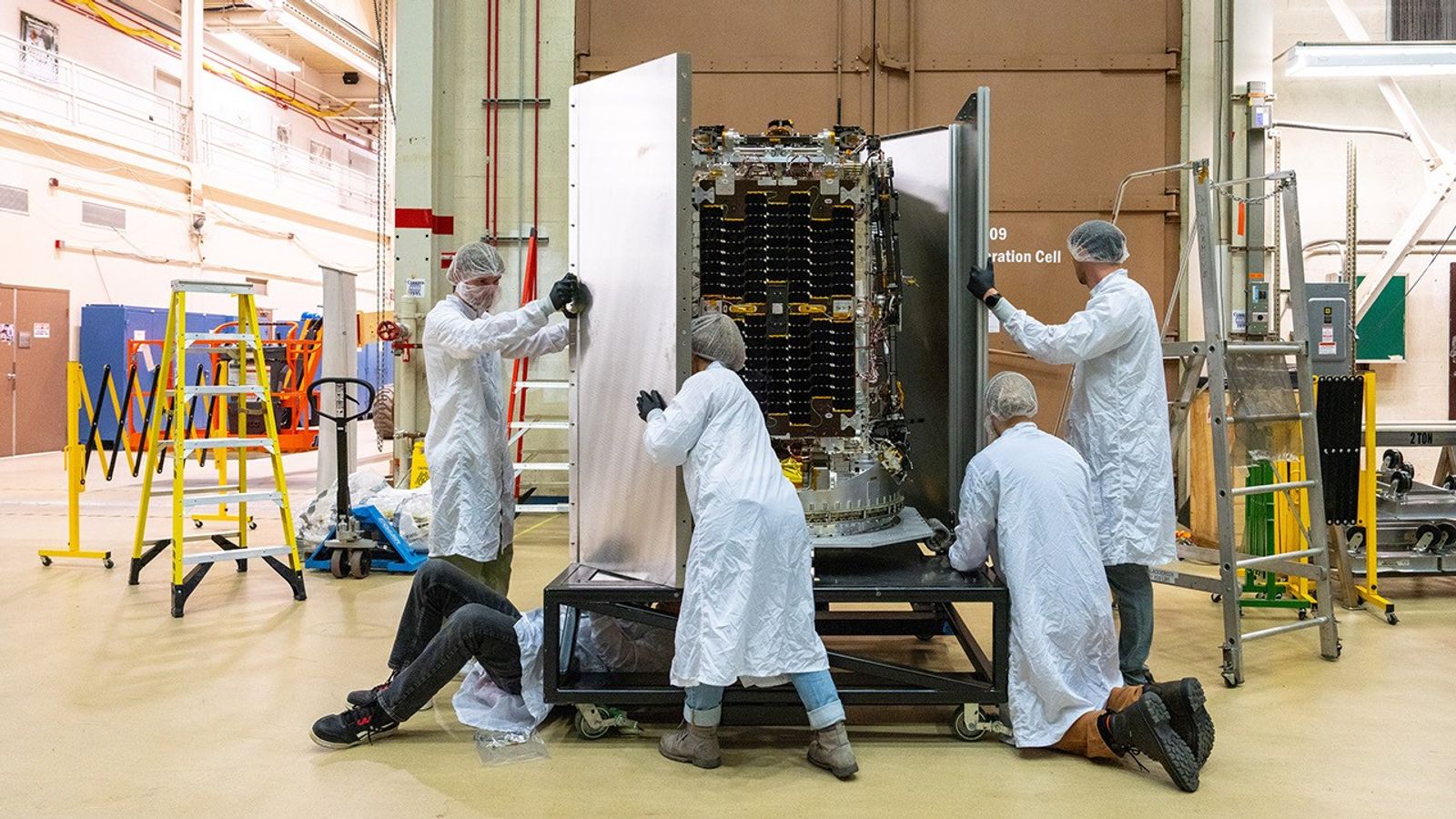
Image details
NASA’s published photograph proportionally resized; no AI alteration.
A boost that did not happen
LINK launched on July 3, but subsequently developed problems controlling its orientation. On August 19, NASA and Katalyst dropped the plan to capture Swift and raise its orbit. They retained a more limited attempt to test rendezvous and proximity operations. The distinction matters to Swift’s prospects: learning how a servicing vehicle behaves near another satellite does not itself give the older observatory additional altitude.[5]
The September 4 progress report described genuine demonstrations: LINK raised its own orbit, adjusted its alignment with Swift, extended three robotic arms and operated three electric thrusters together. It approached to between 12 and 15 kilometers. The report also stated that LINK would come no closer during its remaining operations. Those were technology tests, not a successful rescue of Swift, and the return to observing cannot be read as evidence that an orbital boost occurred.[6]
Swift has operated for more than two decades. It launched in November 2004, and its combination of speed and wavelength coverage found uses beyond gamma-ray bursts, from supernovae to stars disrupted by black holes. By its twentieth anniversary, it had observed 1,800 gamma-ray bursts and 1,400 supernovae, with its data contributing to more than 6,600 scientific publications. The resumed instruments recover access to that observing method while the spacecraft remains operable.[2]
NASA’s August assessment anticipated atmospheric reentry later this year without intervention and said existing missions would help cover the loss while the agency pursued future rapid-response options. It did not identify a single replacement delivering Swift’s full capability. For now, the distinction is between a telescope that can still collect useful observations and an orbit that no longer has the planned means of being raised.[5]
Sources & further reading
Original reporting and research behind this article.
- NASA’s Swift Powers On Third Instrument, Restarts Automated SlewingPublished 2026-09-25
- The Swift SpacecraftUndated; accessed September 26, 2026
- NASA’s Swift Mission Transitions Ops to Prep for Orbit BoostPublished February 11, 2026; updated March 4
- Testing Begins for Katalyst-NASA Swift Boost MissionPublished 2026-04-17
- NASA Updates Next Steps for Commercial Swift Boost MissionPublished 2026-08-19
- Commercial Spacecraft for NASA’s Swift Boost Continues Tech DemoPublished 2026-09-04
- NASA’s Swift Restarts Science ObservationsPublished 2026-08-28
THE DAYBREAK / THE MORNING LETTER
A little more understanding,
every morning.
The day’s selected stories, the context behind them, and a deeper read. A considered start to your day, delivered to your inbox.
See what’s inside