
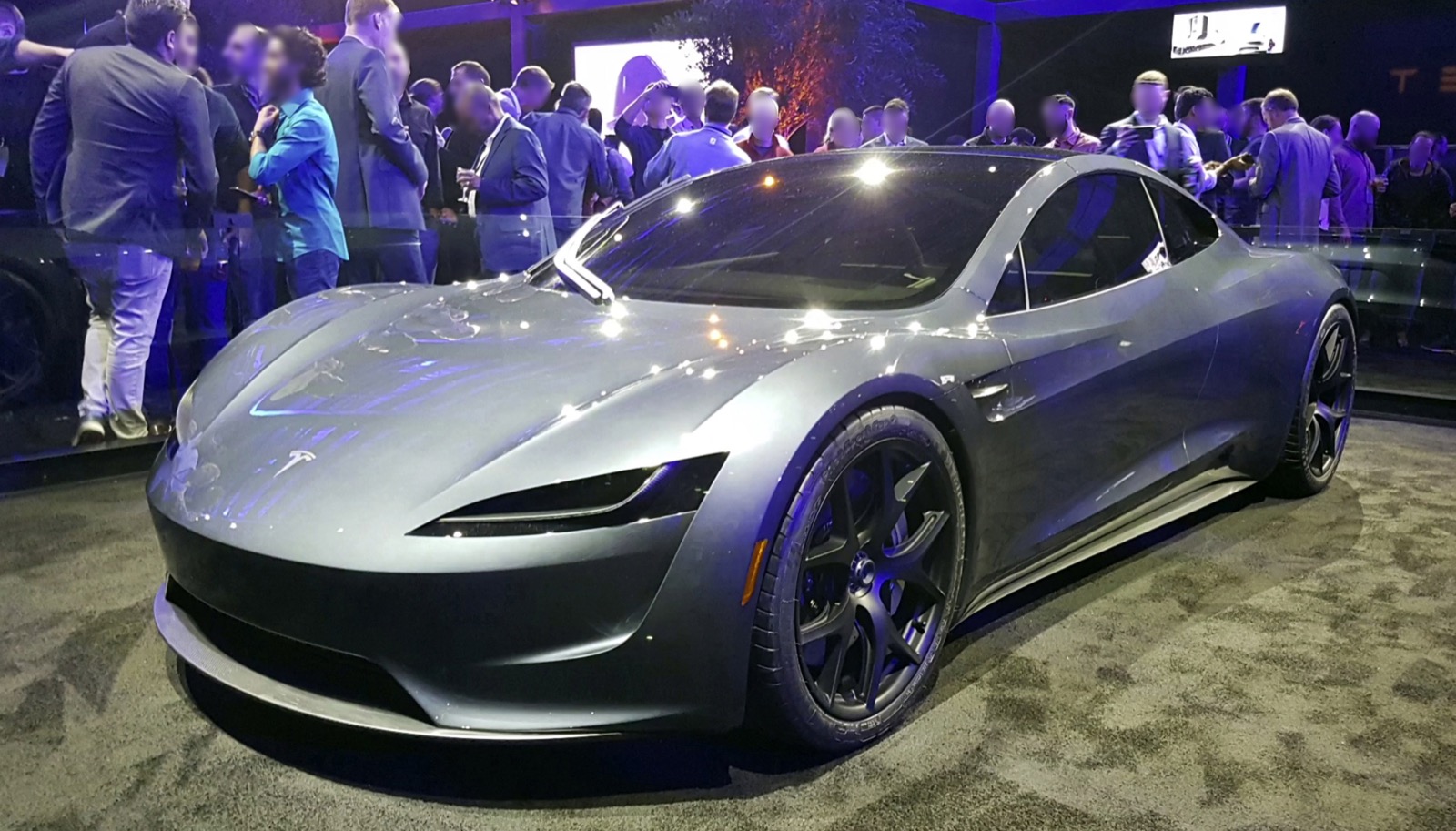
The most intriguing detail in the flight restriction drawing attention ahead of Tesla’s Roadster reveal may be the aircraft it is meant to keep away. The FAA authority cited in the McGregor notice addresses unsafe concentrations of sightseeing aircraft over an incident or event attracting public interest. That is a clue about managing attention, rather than a description of what a car will do.[3]
Tesla has encouraged the anticipation. Its verified account posted “Go for launch” on September 12, above an image marked “10.01.” The company’s Roadster page now carries a countdown. The image pairs a red horizontal light with four bright plumes or beams; reading those shapes as working hardware goes beyond what the teaser demonstrates.[2][8]
Not a Tesla App reports that invitations name Waco, Texas, and puts the event on October 1. Its account links to a digital ticket shared by Tesla watcher Sawyer Merritt. That reporting supplies a regional setting, but an invitation naming a city cannot locate a demonstration inside a particular industrial property.[4]
A real restriction, an unnamed event
The FAA’s live detail page for FDC 6/3825 identifies McGregor and a circle 1.5 nautical miles in radius, extending from the surface through 10,000 feet above ground level. It runs from September 18 at 1200 UTC until October 2 at 1200 UTC. The page categorizes it as a hazard restriction and cites section 91.137(a)(3). It does not name Tesla, Roadster or a planned vehicle maneuver.[1]
Drive Tesla connected the restriction to the approaching reveal in its September 19 report, describing the link as likely on timing grounds. That is a reasonable lead to investigate. It remains an inference, and repeating the same notice through several enthusiast accounts does not turn it into several confirmations of the event’s purpose.[5]
The FAA’s Aeronautical Information Manual gives the cited provision its specific meaning: preventing dangerous crowding by sightseeing aircraft above something likely to attract substantial public interest. Its airspace explanation distinguishes that purpose from protecting disaster-relief operations or people exposed to surface hazards. A restriction can therefore concern people coming to watch. It need not describe something expected to climb toward its upper boundary.[3]
The 10,000-foot figure is the top of the restricted airspace. Treating it as a proposed altitude for a Roadster would invent a flight profile the notice does not contain. Nor does an airspace boundary establish that a particular vehicle has received approval to perform a demonstration.[1]
Why McGregor is a plausible place to watch
SpaceX’s own Falcon user’s guide identifies McGregor as a structural and propulsion testing facility. It says Falcon stages and Merlin engines undergo acceptance testing there before their first flights. That makes the setting relevant without requiring a car: this is already a place where rocket hardware has work to do.[6]
The distinction matters when weighing alternative explanations. Established testing activity supplies a reason to resist treating every preparation at the site as a Roadster preparation. It does not establish that this particular restriction is routine testing, either. The facility’s documented role gives context; a dated announcement identifying the activity would supply the missing connection.[6]
The Roadster connection also has a history beyond this week’s paperwork. Electric Vehicles’ September 12 account traces Musk’s proposed optional SpaceX thruster package to 2018 and his public interest in hovering to 2021. Those are reported ambitions, not results of the coming demonstration. They explain why a launch-themed teaser attracts interpretations that an ordinary sports-car invitation might not.[7]
The same report places the second-generation prototype’s introduction in November 2017, with deliveries originally promised for 2020. Against that history, a new reveal has two jobs in the public imagination: show something striking and make the path toward an actual product more tangible. A dramatic demonstration could satisfy the first while leaving the second unresolved.[7]
The useful questions for the event are consequently specific. What configuration is being shown? Which capabilities are demonstrated in an uninterrupted sequence, and under what conditions? Which features belong to a proposed customer vehicle? What changes between that example and production? These are questions to put to the evidence when it arrives, not claims about a demonstration already seen.
For now, the preparations offer a reason to pay attention. The revealing moment will come when Tesla replaces the suggestive image with something observers can examine—and explains how much of what they see is intended to reach buyers.
Sources & further reading
Original reporting and research behind this article.
- FAA — McGregor restrictionAccessed September 20, 2026
- Tesla — reveal teaserAccessed September 20, 2026
- FAA — temporary flight restrictionsAccessed September 20, 2026
- Not a Tesla App — invitationsAccessed September 20, 2026
- Drive Tesla — McGregor speculationAccessed September 20, 2026
- SpaceX — Falcon user guideAccessed September 20, 2026
- Electric Vehicles — reveal and historyAccessed September 20, 2026
- Tesla — Roadster countdownAccessed September 20, 2026