
Flávio Bolsonaro enters Brazil’s presidential runoff ahead of Luiz Inácio Lula da Silva after neither candidate won a majority in Sunday’s vote. The presidency remains open until October 25. Their next campaign will be fought alongside a new set of legislative results that changes the prospects for governing.[11][4]
The Superior Electoral Court’s overnight snapshot put Bolsonaro at 47.03 percent of valid votes and Lula at 45.16 percent. That was a lead of 1.87 percentage points, calculated from the court’s published shares, with 99.99 percent of voting machines tallied at 12:11 a.m. Brasília time Monday. Neither candidate secured the majority needed to avoid a second round.[1]
The contenders know very different parts of public life. Bolsonaro, 45, is a senator from Rio de Janeiro making his first presidential bid. Lula, 80, is seeking another term after serving as president from 2003 to 2010 and returning to the office in 2023. Their overnight totals establish who advances; they do not decide how voters will respond to a ballot reduced to two names.[1]
Bolsonaro told reporters that “Brazil wants change,” according to Agência Brasil’s account of his press conference. Lula acknowledged that he had expected a first-round victory and told supporters in São Paulo that a new campaign would begin. Both were describing how they wanted the next three weeks to be understood: a chance to replace the incumbent, or a fresh choice in which he could recover.[2]
A legislature with a clearer center of gravity
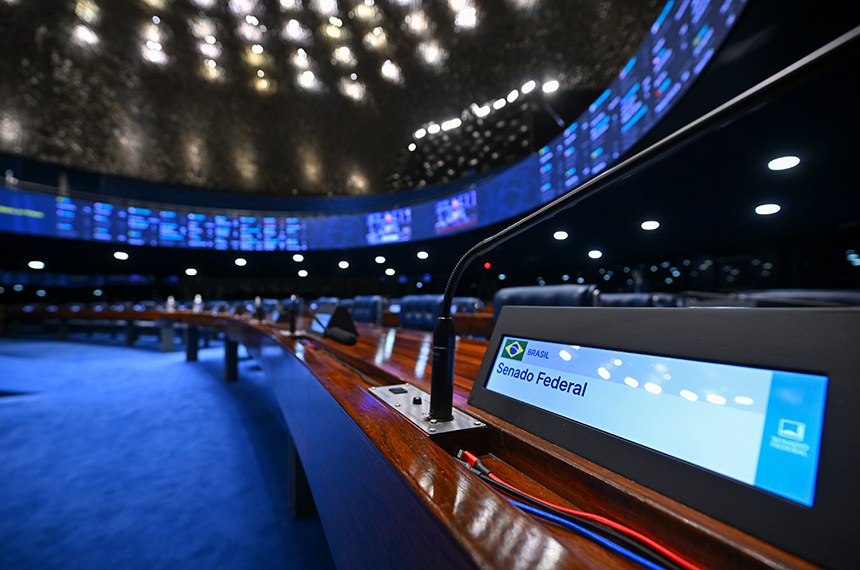
The PL elected 19 senators on Sunday and is projected to begin the next legislature with 28 members, according to Agência Senado. That would make it the largest single-party Senate delegation at the start of a legislature since the 1988 Constitution. The same projection places Lula’s Workers’ Party at nine senators and the Brazilian Democratic Movement at eight.[3]
Those are provisional figures. Party switches, ministry appointments and remaining gubernatorial contests can change who occupies seats in February, Agência Senado cautions. The projected lineup is not a binding agreement to support a presidential program.[3]
In the lower house, Agência Câmara reported 121 PL deputies elected. The next-largest group was the PT-PCdoB-PV federation, with 88. The agency based its account on 99.9 percent of votes counted and said the remaining count could no longer change that result. This is a comparison between a party and a federation of three parties; it is not a tally of every legislator who might eventually support either president.[4]
The Senate contest also renewed a large share of the institution. Fifty-four of its 81 seats were at stake, for eight-year terms. Forty of the winners were newcomers and fourteen were reelected senators. The other 27 seats were filled in 2022 and were not up for election this year. That staggered system means the chamber taking office in 2027 combines Sunday’s choices with a continuing group from the previous election.[5]
A 28-member delegation in an 81-seat Senate would still need partners. Bolsonaro would have a larger party base from which to negotiate; Lula would need support well beyond the PT. Neither candidate yet has a guaranteed coalition for a tax bill or a contested appointment.[3][5]
Why those seats matter to the promises
Brazil’s Congress has two houses. Constitutional amendments must pass two rounds of voting in each, with three-fifths support in both rounds. The Senate also has a distinct role in approving senior appointments, including the central bank’s leadership and judicial nominees where the Constitution requires it. Winning the presidency therefore gives a candidate powers and initiative, while important parts of an ambitious agenda still require legislators’ votes.[8]
This is particularly relevant to Bolsonaro’s registered platform. It proposes changing the Supreme Federal Court’s responsibilities, limiting decisions by individual justices and ending presidential reelection. Those proposals would have to be evaluated through the applicable legislative and constitutional procedures. A larger PL delegation could help advance them, but the election has not itself enacted any of them.[6][8]

Image details
Proportional source rendition; no additional crop or alteration.
His economic program calls for revised fiscal rules aimed at stabilizing and then reducing public debt, primary budget surpluses and limits on Treasury-supported subsidized credit. It proposes eliminating at least ten ministries and resuming privatization on a case-by-case basis. These are campaign commitments in the document filed with the electoral authorities, not an independently costed forecast of what his government would deliver.[6]
Lula’s registered program takes a different route. It proposes maintaining the existing fiscal framework while combining control of spending growth with better spending quality and changes intended to make taxation fairer. The document emphasizes public and private investment in infrastructure, industry and an ecological transition. It also promises to continue seeking an end to the six-days-on, one-day-off working schedule and a 40-hour week without a pay cut.[7]
Both programs promise lower interest rates and controlled inflation. Bolsonaro’s places greater weight on restructuring the state and changing fiscal rules; Lula’s emphasizes continuity of the framework and investment-led development. Those are differences in proposed policy. Neither document, written to win an election, supplies an independent verdict on the rival campaign’s record.[6][7]
Image details
Proportional source rendition; no additional crop or alteration.
The voters still to be won
The first round does not supply an automatic transfer rule for the runoff. Voters who chose another candidate can select either finalist, cast a blank or invalid ballot, or stay home. Support from a defeated politician is consequently a campaign asset, not a block of votes that can simply be added to Sunday’s tally. The two leading percentages leave room for a change in the outcome without any change to the first-round result.[9]
Turnout is another part of that uncertainty. Agência Brasil reported abstention of 21.08 percent, about 33.4 million eligible voters, in the first round. It also reported 2.2 million blank ballots and 3.6 million invalid ones; neither category is included in valid votes. Electoral court president Kassio Nunes Marques said he wanted to reduce abstention in the second round. Those figures describe participation, not which candidate nonvoters would prefer.[9]
Reuters’ reporting from São Paulo offered one small illustration of the choices behind the totals. Lawyer Thaise Lima, 41, said before voting that she wanted Lula’s party out but did not consider Flávio Bolsonaro the best candidate. One voter cannot represent an electorate. Her account does show why a vote against an incumbent and enthusiasm for his challenger should not be assumed to mean the same thing.[11]
The next phase has a short, defined timetable. The electoral calendar provides for second-round radio and television campaign advertising from October 9 through October 23, ahead of the October 25 vote. It is a new opportunity to press both finalists on the costs, legislative support and practical sequence of their proposals.[10]
Sources & further reading
Original reporting and research behind this article.
- TSE: presidential runoff and vote-count snapshotSource dated 2026-10-05; checked October 5, 2026
- Agência Brasil: candidates respond to the first roundSource dated 2026-10-05; checked October 5, 2026
- Agência Senado: projected party composition for 2027Source dated 2026-10-04; checked October 5, 2026
- Agência Câmara: PL wins 121 seatsSource dated 2026-10-05; checked October 5, 2026
- Agência Senado: forty newcomers and fourteen reelected senatorsSource dated 2026-10-05; checked October 5, 2026
- Flávio Bolsonaro: registered 2027–2030 government programPrimary document; checked October 5, 2026
- Lula: registered government programPrimary document; checked October 5, 2026
- Brazilian Constitution: Congress, Senate powers and amendmentsPrimary document; checked October 5, 2026
- Agência Brasil: electoral court seeks to reduce abstentionSource dated 2026-10-05; checked October 5, 2026
- TSE: 2026 electoral calendarPrimary document; checked October 5, 2026
- Reuters: first-round result and reporting from votersSource dated 2026-10-05; checked October 5, 2026
THE DAYBREAK / THE MORNING LETTER
A little more understanding,
every morning.
The day’s selected stories, the context behind them, and a deeper read. A considered start to your day, delivered to your inbox.
See what’s inside