
The G7 has agreed to release 100 million barrels of oil and fuel over four months, with a substantial diesel release planned within the first twenty days. Friday’s agreement puts the immediate emphasis on a product that powers freight trucks, farm machinery and many heating systems. The practical question is how quickly that fuel reaches the places short of it.[1][5]
There is a reason for the emphasis. International Energy Agency chief Fatih Birol told leaders that Middle Eastern crude exports had recovered significantly while flows of refined products remained severely constrained. Ukrainian attacks on Russian refineries were adding to the diesel pressure, the agency said. A recovery in shipments of unprocessed oil can therefore coexist with a shortage of usable fuel.[2]
Diesel sits close to everyday commerce. Alongside trucks and farm vehicles, it fuels trains, buses, boats and construction equipment; diesel generators also provide backup power at hospitals and other facilities. Most American diesel is made from crude oil, although biomass-based versions are also produced. A squeeze can affect people who never choose diesel at a filling station because it changes the cost of moving goods and operating equipment.[5]
Why another barrel of crude is not another barrel of diesel
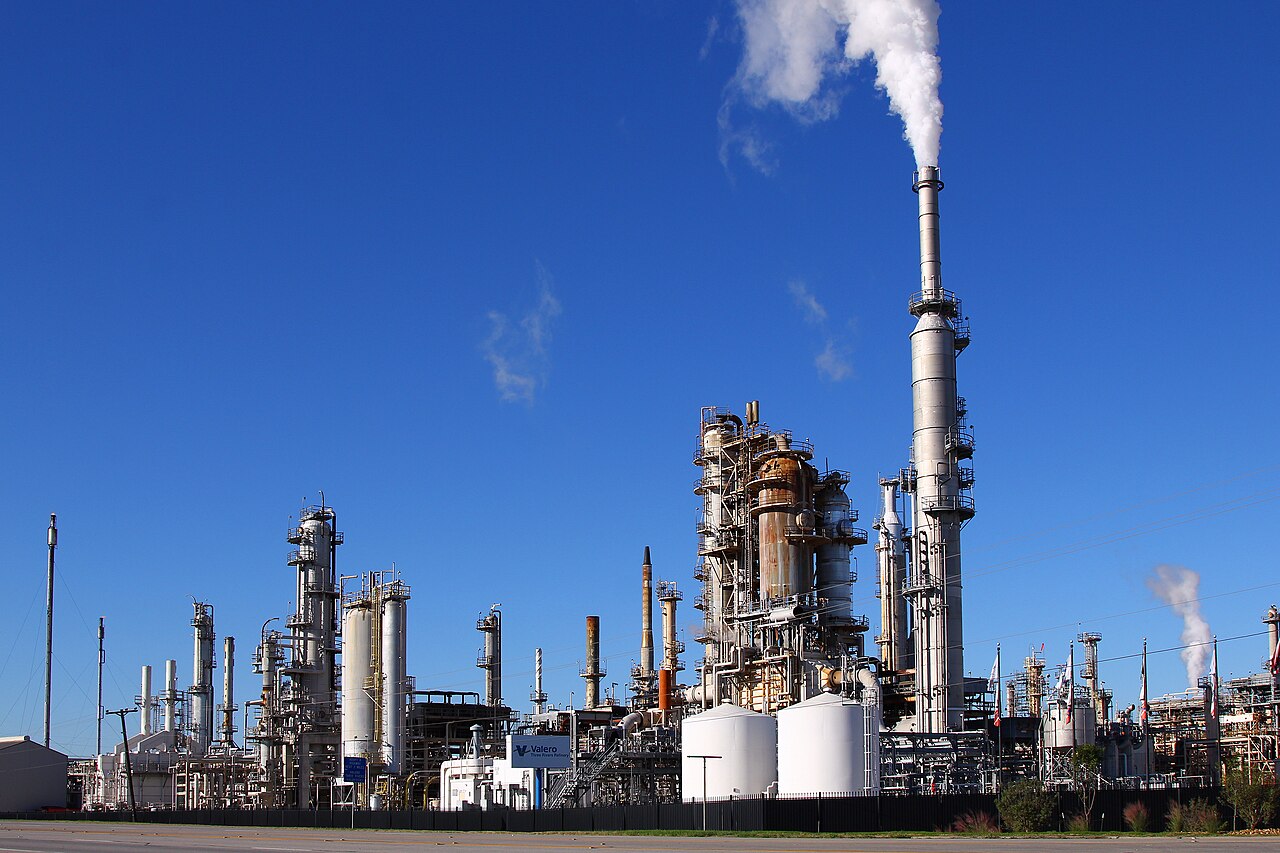
A refinery takes crude through separation, conversion and treatment. Heating first separates components according to their boiling points. Other equipment changes heavier molecules into more valuable products, and treatment brings the resulting streams toward finished fuels. Diesel emerges from an industrial process that requires functioning equipment, rather than simply being poured out of a tank of crude. Incoming oil and finished products also occupy different storage tanks before pipelines, trains and trucks move supplies onward.[7]
The distinction can be expressed in familiar units. EIA says American refineries produce an average of eleven to twelve gallons of diesel from a 42-gallon barrel of crude. That is an average product yield, not a conversion promised for the G7 release. The announced total includes crude and fuel, and the mix determines how much can enter the diesel market directly.[5]
September’s IEA oil-market report showed how far the product market had tightened. It estimated Gulf diesel and gasoil net exports at 390,000 barrels a day in August, just over a quarter of their prewar level. Together, Gulf and Russian exports were 1.6 million barrels a day below February. Those are estimates for August, not measurements of supplies after Friday’s agreement, but they identify the gap governments are trying to bridge.[3]
The same report put August refinery processing worldwide at 81.4 million barrels a day, 4.2 million below a year earlier. Higher refining margins gave surviving plants an incentive to make more fuel. That incentive could not immediately restore damaged plants or unrestricted shipping. In the agency’s account, the shortage had become particularly acute in refined products even as attention remained fixed on headline crude prices.[3]
The autumn collision
The timing is difficult in the United States. EIA’s September outlook described an autumn overlap: refinery maintenance tends to reduce distillate production just as farmers’ harvest demand rises. Winter then brings heating-oil demand, including in the Northeast. Distillate is the broader petroleum category that includes diesel and heating oil; pressure in one use can reach the others.[4]
EIA expected low inventories to persist and international shortages to encourage American exports. It also made its price outlook conditional on improvements in flows out of the Middle East. Those forecasts predate the new agreement. They should not be treated as proof of where stocks stand today or how much prices will fall, but they explain why releasing fuel earlier in the four-month window could matter more than an evenly paced drawdown.[4]
Retail prices add another layer. EIA separates the pump price into crude acquisition, refining, distribution and retail costs, and taxes. If fuel cannot move quickly from a better-supplied region to a short one, the receiving region can remain expensive. Local competition and transport distance also influence the final price. A falling international benchmark does not specify when a particular truck stop or heating-oil customer will see relief.[6]
Reserves buy time; deliveries determine the effect
Friday’s announcement also needs to be read alongside earlier commitments. The IEA said about 325 million barrels had already been released under the 400-million-barrel collective action announced March 11. The G7 described its latest step as implementing commitments while taking completed releases into account. Readers should not simply add the October headline to March’s pledge and conclude that 500 million barrels of entirely new supply have been delivered.[2][1]
The American Strategic Petroleum Reserve illustrates what such a commitment involves physically. Its four sites in Texas and Louisiana store crude in deep salt caverns. DOE lists a maximum nominal drawdown capability of 4.4 million barrels a day and about thirteen days from a presidential decision for oil to enter the U.S. market. Those figures describe that particular reserve’s capabilities; they are not a schedule for every country participating in the G7 action, nor do they turn its stored crude into finished diesel.[8]
The package also calls for coordinating refinery maintenance, increasing utilization where feasible and avoiding energy-export restrictions between G7 members. Leaders asked the IEA to report back before twenty days and left further diesel releases for discussion. They did not publish a country-by-country delivery timetable or an exact diesel share in the joint statement.[1]
The supply chain gives those follow-ups a concrete test. Fuel already refined and near customers can take a shorter route to use. Crude drawn from a reserve still needs a refinery and onward transport. Where those steps remain constrained, more oil in storage or at a port does not by itself resolve the local shortage. The useful evidence will be completed deliveries and the availability of finished fuel, followed by the prices households and businesses actually pay.[6][7]
Sources & further reading
Original reporting and research behind this article.
- G7 leaders: energy security and market stabilitySource dated 2026-10-02; checked October 4, 2026
- IEA: briefing G7 leaders on diesel suppliesSource dated 2026-10-02; checked October 4, 2026
- IEA: September oil-market report, public highlightsSource dated 2026-09-11; checked October 4, 2026
- EIA: September 2026 Short-Term Energy OutlookSeptember 9, 2026 forecast; inputs finalized September 3; checked October 4, 2026
- EIA: diesel fuel explainedchecked October 4, 2026
- EIA: factors affecting diesel priceschecked October 4, 2026
- EIA: how refining workschecked October 4, 2026
- Department of Energy: Strategic Petroleum Reserve factschecked October 4, 2026
THE DAYBREAK / THE MORNING LETTER
A little more understanding,
every morning.
The day’s selected stories, the context behind them, and a deeper read. A considered start to your day, delivered to your inbox.
See what’s inside