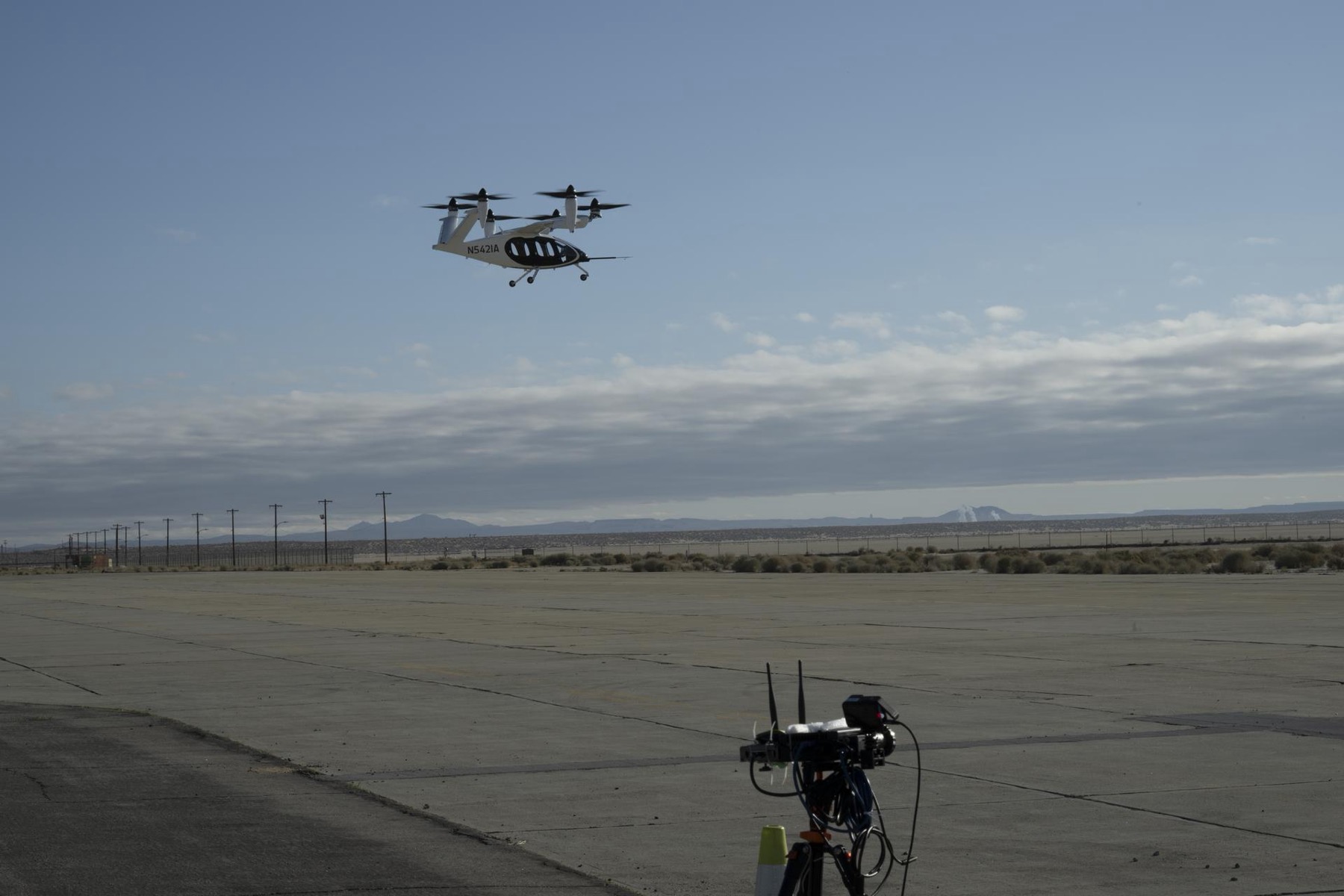
Texas became the sixth location to launch operations under the federal advanced-air-mobility pilot program on Thursday, with demonstrations at Perot Field Fort Worth Alliance Airport. BETA Technologies and Joby Aviation participated alongside the Texas Department of Transportation. The longer ambition is a regional network linking Dallas, Austin and San Antonio, with Houston to follow.[1]
The FAA’s September 10 announcement also scheduled a Joby round trip between Alliance and Dallas Fort Worth International Airport for Saturday. That was a planned operational test, not an announcement of a passenger timetable. Its significance lies in the proposed interface: an experimental service meeting an airport whose traffic, surface movements and connections already have their own demands.[1]
The useful question is what an aircraft can do repeatedly inside that system. A flight demonstration can establish that a particular operation worked under particular conditions. A transport service must also establish how it behaves when the aircraft arrives late, the landing area becomes unavailable, weather narrows the operating window or the next departure needs more preparation than planned. Those are the questions by which the program should ultimately be judged.
What the pilot program can establish
The FAA’s program fact sheet draws an explicit boundary around the exercise. Participating aircraft must already be in the formal type-certification process; the program is intended to inform standards and policy, rather than bypass certification. Initial operations can be tailored to the aircraft and location. The stated duration is three years after the first project becomes operational.[2]
The selected work is broader than urban passenger flights. It includes regional aircraft with short-field capabilities, cargo, medical and emergency logistics, offshore support and automation. That variety matters because the operating case for moving a time-sensitive shipment can differ substantially from the case for carrying a fare-paying passenger to a scheduled airline connection.[2]
There is already a regulatory foundation beneath the experiment. In October 2024, the FAA issued permanent amendments and a ten-year special regulation addressing powered-lift pilot qualifications and operating rules. Its framework included ways to establish the initial instructor and pilot population, including training challenges presented by aircraft with one pilot station and a single set of functioning controls.[3]
That history makes it misleading to describe every demonstration as the moment this category becomes possible. Several distinct questions are being resolved at different speeds: the vehicle, the people qualified to operate it, the approved operation and the infrastructure that supports it. Progress in one does not establish completion of the others. Nor does a useful experiment need to establish all four to be worth conducting.
The air around the aircraft
Research at NASA Armstrong provides a concrete example of the work behind the visible flight. In March 2025, engineers used a Joby demonstrator to examine rotor-generated airflow near the ground. Lidar sensors helped characterize wind structures, while a separate network of radar, cameras and microphones gathered aircraft-tracking information. The agency described these as development efforts for future operations, including activity around landing zones and urban traffic corridors.[4]
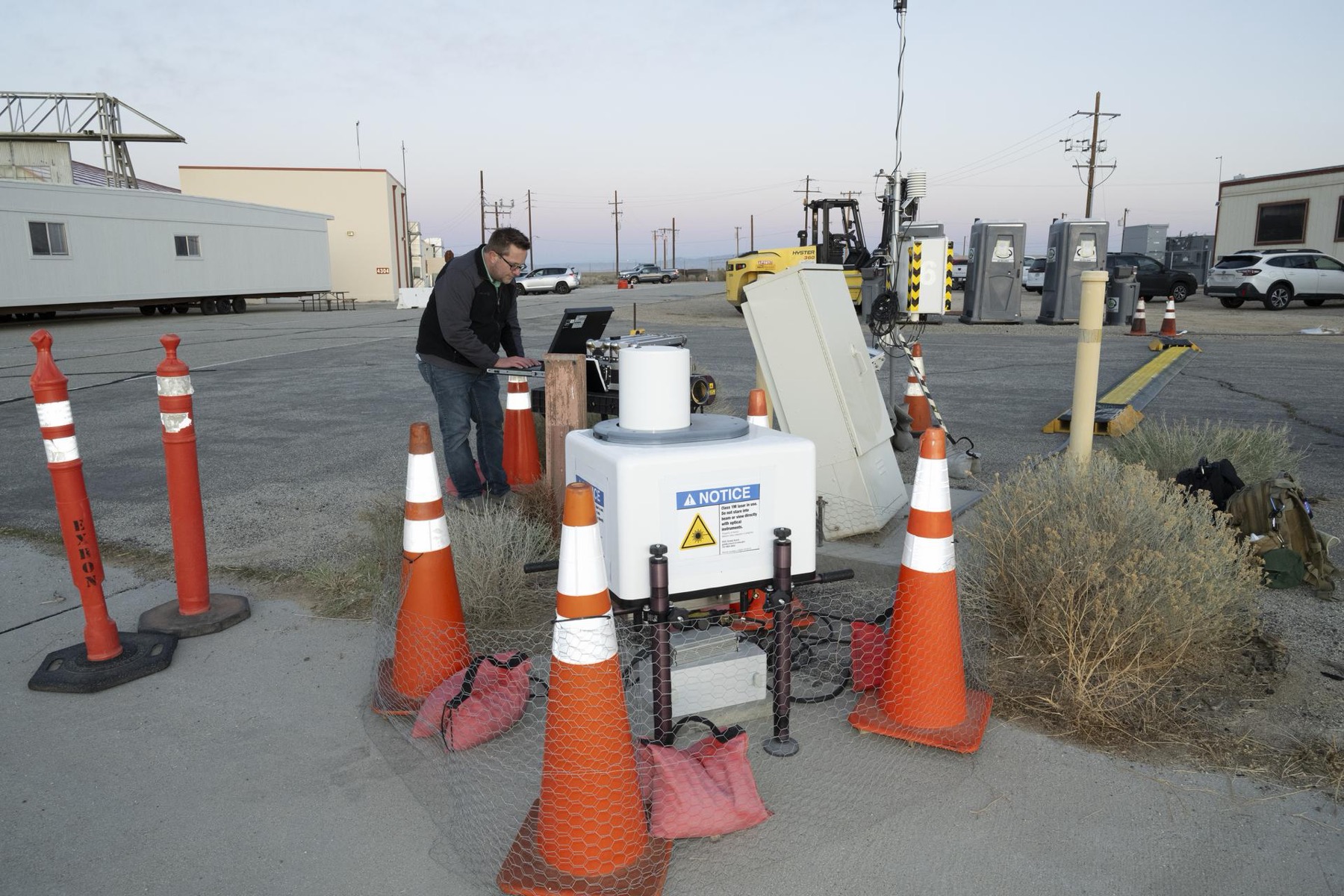
Image details
Resized proportionally; no retouching. Display crops disclosed by the reader.
The two measurement problems should stay separate. Knowing precisely where an aircraft is does not by itself tell a ground crew what airflow it will encounter. Measuring a wake does not establish the reliability of the surveillance system. A future landing site may depend on both, but combining them under a broad claim of successful integration can conceal which capability has actually been demonstrated.
An earlier NASA campaign with Joby, announced in September 2021, collected vehicle-performance, communications and acoustic information. The plan called for more than 50 microphones to measure sound through different phases of flight. That approach treated noise as something to characterize across a flight profile, rather than a single number describing the vehicle in all circumstances.[5]
The operational extension is straightforward: a landing site needs to be assessed as a place where flights recur. A quiet individual arrival and a tolerable daily pattern are different propositions. Frequency, operating hours, approach paths and the position of nearby listeners can change the practical question even when the aircraft is unchanged. The relevant comparison is the proposed service pattern, including its least convenient operating periods.
What happens after landing
For an airline connection, the commercial promise is especially exacting. The customer is buying a dependable arrival before another departure, not simply a fast flight over congested roads. An evaluation that follows only the experimental aircraft stops short of the point at which that promise is either met or broken.
Consider an illustrative airport connection. The airborne leg finishes on schedule, but the passenger still has to leave the landing area and reach the terminal process. If that transfer is unpredictable, an excellent flight-time result may deliver little improvement in the journey that was sold. The same distinction applies to cargo: aircraft block time is only one component of a delivery commitment.
A credible trial should therefore record elapsed time across the complete movement, with separate measurements for the flight and the transfers. It should retain cancellations and interrupted attempts in the record. Excluding the days on which a service cannot run would make its typical performance look better while discarding precisely the information a connecting passenger or logistics customer needs.
Aircraft turnaround deserves similar attention. The important output is readiness for the next assigned mission under its actual payload and conditions. A demonstration that ends when the vehicle lands cannot show how much staffing, equipment access, inspection or energy replenishment the subsequent departure requires. Those inputs determine whether an appealing route can become a dependable sequence of flights.
The most informative public reporting would show distributions, not just milestones: completion rates, turnaround variability, interruption causes and the conditions under which operations were restricted. It would also distinguish constraints imposed for a developmental trial from those expected to remain in service. A deliberately conservative test should not be judged as a mature timetable, but its safeguards should not disappear from the description either.
Texas offers a useful setting for learning at the boundary between new aircraft and established airports. The next persuasive milestone will be a body of operational evidence that another airport can examine and reproduce. The flight is the visible event. The program’s lasting value will depend on how well it explains the conditions that made that event possible—and the conditions that prevented it.
Sources & further reading
Original reporting and research behind this article.
- FAA: Texas launches federal eVTOL pilot demonstrationsSep 10, 2026
- FAA: eIPP announcement fact sheetMar 9, 2026
- FAA: powered-lift pilot certification and operations frameworkOct 22, 2024
- NASA: wind effects and aircraft tracking researchApr 17, 2025
- NASA: initial air-taxi flight-testing campaignSep 1, 2021