
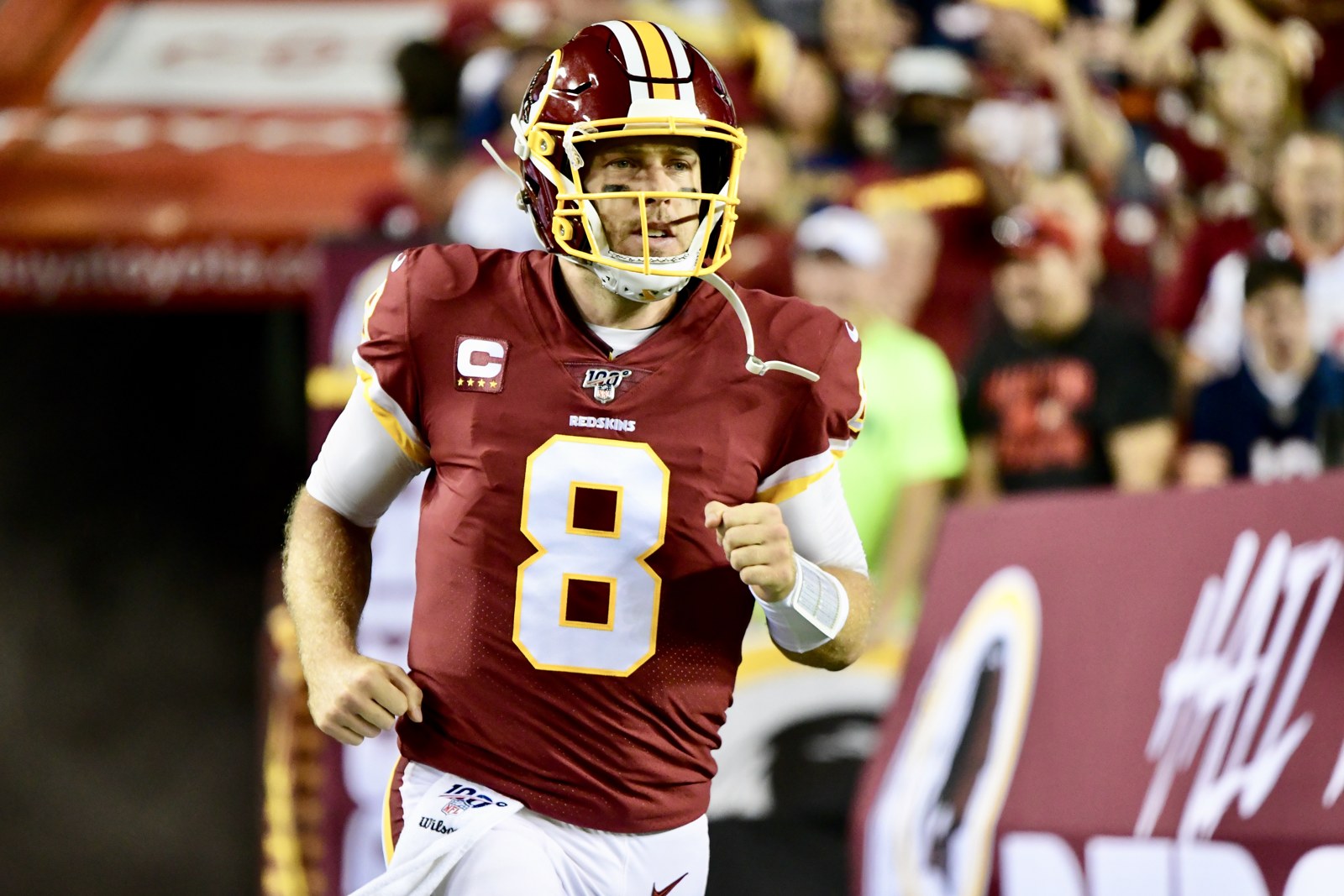
Case Keenum threw two touchdown passes, ran for another and let Chicago’s defense finish the job. In his first start for the Bears, the veteran quarterback led a 27–7 victory over the Philadelphia Eagles on Monday night at Soldier Field, turning a three-point halftime lead into a comfortable win.[1]
Keenum was Chicago’s third quarterback entering the season. Caleb Williams’ hamstring injury and Tyson Bagent’s late clearance from concussion protocol put the offense in his hands. The Bears gave him protection, receivers who gained ground after the catch and a defense that forced three turnovers. Both teams finished the night 2–1.[2]
Keenum completed 24 of 34 passes for 247 yards without an interception. Kalif Raymond caught six passes for 90 yards, with a 41-yard touchdown, while Luther Burden III had seven catches for 61 yards and the opening score. Keenum distributed the ball quickly: NFL Pro data cited by NFL.com credited him with 145 yards and both passing touchdowns on throws released in less than 2.5 seconds.[5]
Philadelphia could not sustain its first-half running success or generate a takeaway of its own. Saquon Barkley gained 73 yards before halftime, then nine on four carries afterward. Jalen Hurts briefly left for a concussion evaluation, returned before the break and scored the Eagles’ only touchdown. His replacement, Andy Dalton, threw an interception in the end zone during the absence.[3]
A prepared replacement
Keenum’s return had been taking shape on the practice field. With Williams and Bagent unable to practice earlier in the week, he ran the first-team offense. Offensive coordinator Press Taylor said Friday that Keenum had been involved since the Bears began installing their offense the previous year, watching it develop and contributing ideas. His opportunity came after spending much of that time helping other quarterbacks prepare to play.[6]
He had not started a regular-season game since December 2023 with Houston. After Monday’s win, Ben Johnson described a quarterback who understood where his receivers should be and moved quickly through his options when the defense took away the intended play. Keenum, who has moved repeatedly between starting and backup jobs, told reporters: “To get a shot again like this? Yeah, you dream of it.” His remarks were carried by The Associated Press.[7]
The first drive showed how much Chicago could ask of him. On fourth-and-one at Philadelphia’s 32, Keenum found rookie tight end Sam Roush for 16 yards. Three plays later, an eight-yard shovel pass to Burden finished an 11-play, 66-yard possession. Keenum completed five of his six throws on the drive.[1]
Burden had work left after the catch. He broke a tackle and kept driving into a pile, with left tackle Braxton Jones helping push him across the goal line. Johnson said he initially expected only a first down; the linemen’s willingness to follow the play turned it into a touchdown.[2]
Philadelphia keeps the game close
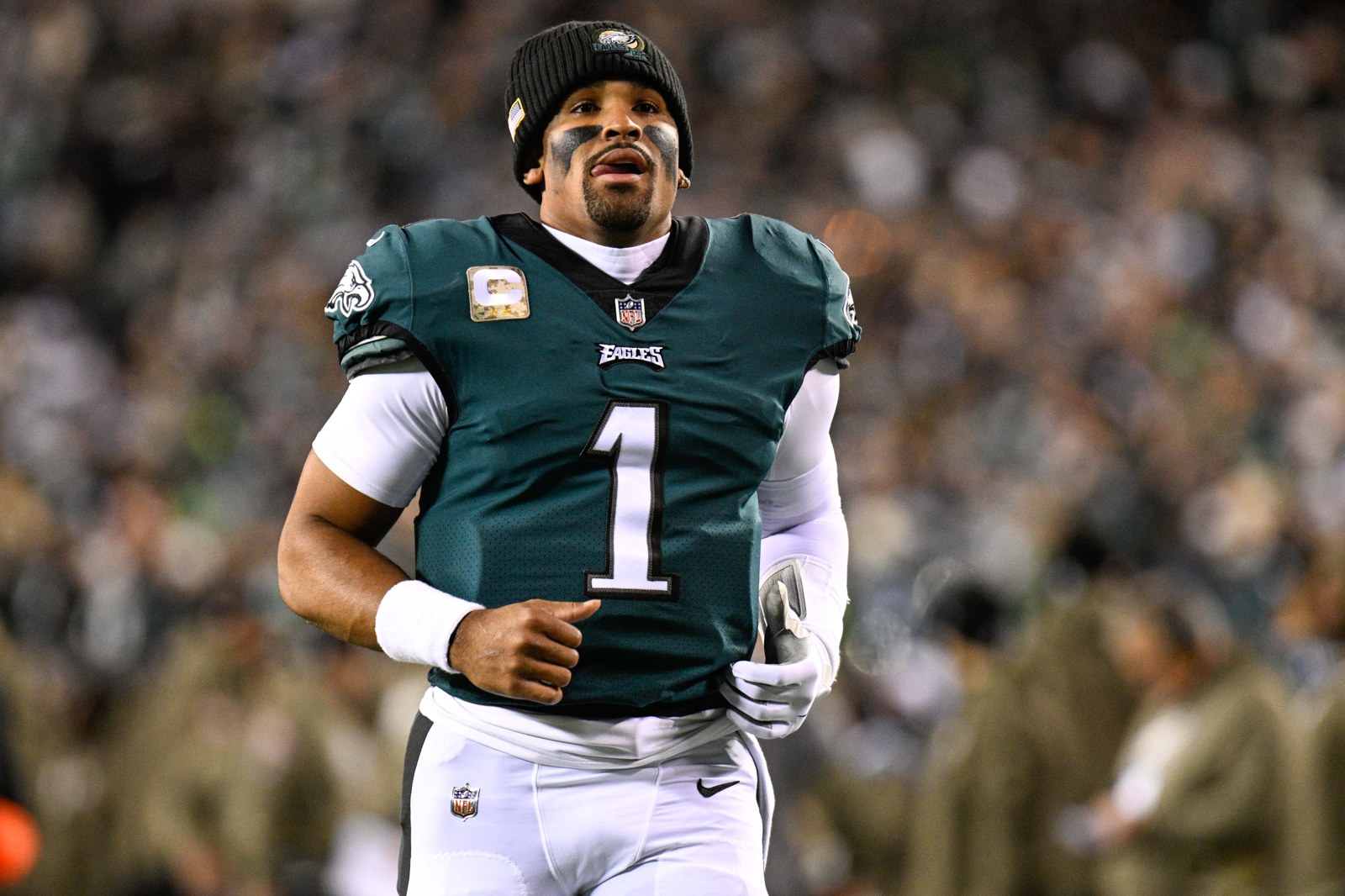
Image details
Proportionally resized from 5392 × 3592 to 1600 × 1066; no crop or generative alteration. Resized image remains CC BY-SA 2.0.
The Eagles’ defense prevented an early runaway. After Austin Booker forced Tank Bigsby to fumble and Xavier Woods recovered at Philadelphia’s 15, Chicago reached the one. Quinyon Mitchell eventually broke up the fourth-down pass to Burden, ending the threat. Mitchell also disrupted a later screen and broke up another third-down throw; the Eagles had useful individual performances even as their offense struggled to stay on the field.[3]
Barkley’s runs carried Philadelphia back toward the opposite goal line. But Hurts’ departure for evaluation left Dalton facing third-and-goal, and rookie safety Dillon Thieneman intercepted his throw. The Eagles had gone almost the length of the field without scoring. Chicago turned the possession that followed into a field goal and a 10–0 lead.[5]
Hurts returned and drove 67 yards in the final 1:52 of the half. DeVonta Smith’s 30-yard catch brought Philadelphia inside the Chicago 20; his eight-yard reception near the goal line left just enough time for Hurts to score on a sneak as the clock expired. Smith finished with six catches for 65 yards. Hurts completed 16 of 25 passes for 153 yards.[1]
That late touchdown kept the deficit manageable, but it did not erase the Eagles’ recurring trouble getting started. Through three games they had yet to score in the first quarter. Their defense also remained without a takeaway, leaving Philadelphia with a minus-five turnover differential. Monday’s performance added penalties to the problem: ten were accepted, repeatedly costing the Eagles field position or chances to end a drive.[4]
Chicago takes away the second half
The Bears forced punts on Philadelphia’s first three possessions after halftime. Meanwhile, Cairo Santos added a field goal and Raymond turned a pass over the middle into the game’s longest gain. With space to his left, Raymond ran away from the coverage and beat safety Andrew Mukuba to the end zone. The touchdown made it 20–7, and Philadelphia’s promising finish to the first half had yielded nothing after the restart.[5]
The Eagles finished with only 62 second-half yards. Barkley pointed afterward to ineffective first-down runs and the longer distances that followed. Dalton accepted responsibility for his earlier interception: “I obviously didn’t see the safety in the middle,” he said in Philadelphia’s postgame account. The missed scoring chance had mattered while the game was close; after halftime, the Eagles had difficulty creating another.[3]
Nick Sirianni also questioned his own fourth-down decisions. Trailing by thirteen near midfield in the third quarter, Philadelphia tried unsuccessfully to draw Chicago offside, took a delay-of-game penalty and punted. Sirianni said afterward that he wished he had gone for the short conversion. On the next possession, he did keep the offense out on fourth-and-five, but T.J. Edwards intercepted Hurts. Chicago had another opportunity to consume time and extend its lead.[7]
Philadelphia had neither sacked Keenum nor taken the ball away. Its early resistance to the run had forced Chicago to rely on its replacement quarterback, and he had kept finding receivers. Quick drops and accurate short passes gave the Bears a way to move the ball before their running game improved.[4]
Keenum made that possession last. On fourth-and-two, he drew defensive tackle Moro Ojomo across the line to give Chicago a fresh set of downs. The drive ended with Keenum’s one-yard touchdown run and 7:19 remaining. Johnson explained afterward that a late movement by Philadelphia’s defensive front opened the route for the sneak. Keenum credited preparation: “Those are the things that guys work extremely hard on,” he said in the Bears’ published account.[2]
Sources & further reading
Original reporting and research behind this article.
- Official final gamebook2026-09-28
- Chicago postgame report2026-09-28
- Philadelphia postgame report2026-09-29
- Philadelphia season context2026-09-29
- NFL analysis and passing data2026-09-28
- Press Taylor on Keenum’s preparation2026-09-25
- Associated Press game report2026-09-28
- Keenum photograph and license2019-09-23
- Hurts photograph and license2022-11-14
THE DAYBREAK / THE MORNING LETTER
A little more understanding,
every morning.
The day’s selected stories, the context behind them, and a deeper read. A considered start to your day, delivered to your inbox.
See what’s inside