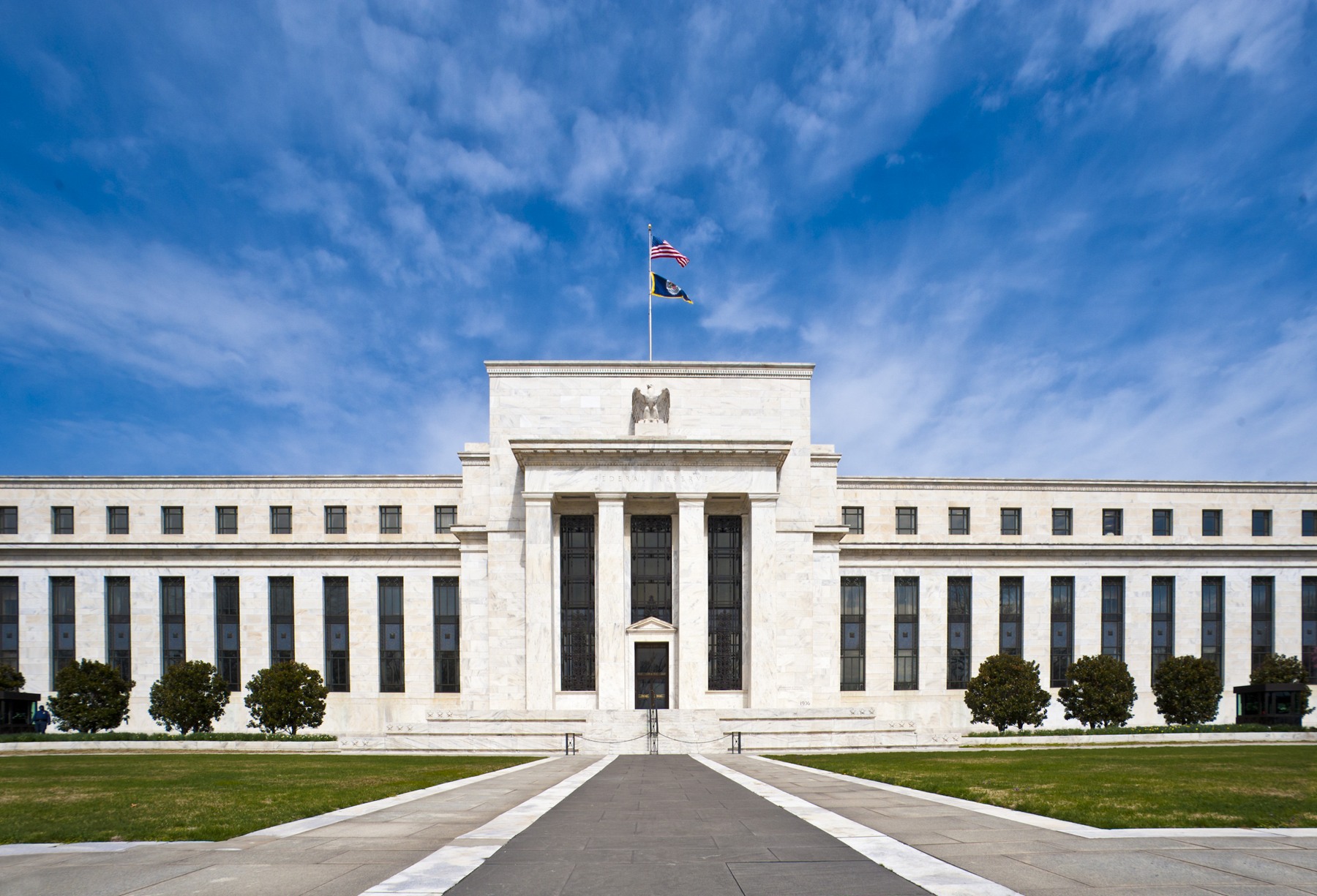
The Federal Reserve raised its benchmark interest-rate target by a quarter percentage point Wednesday, to 3.75–4 percent. All twelve voting members supported the decision. The statement described solid economic growth, resilient spending and elevated inflation, arguing that tighter policy would help bring price increases back toward the central bank’s two percent goal.[1]
The consequential combination is continued expansion and unfinished disinflation. A growing economy gives policymakers room to apply restraint, but it also makes the point at which that restraint becomes excessive harder to identify. The decision changes the price of short-term money immediately. Its success will depend on how spending, hiring and price-setting respond over a much longer period.
The inflation figures tell more than one story
August’s Consumer Price Index rose 0.4 percent from July after seasonal adjustment, compared with July’s 0.1 percent increase. Over twelve months, consumer prices increased 3.4 percent. Gasoline rose 3.9 percent during August and accounted for more than a third of the monthly increase. Excluding food and energy, prices rose 0.3 percent for the month and 2.4 percent over the year.[3]
That annual core rate was down from 2.5 percent in July. The report consequently contains both an acceleration in the latest overall monthly figure and a moderation in the annual measure that excludes food and energy. They answer different questions. Neither figure alone describes the breadth, persistence and recent direction of all price pressures.[3]
Reading them together helps explain the difficulty of judging momentum. A large movement in one category can lift the overall index, while the twelve-month comparison also reflects what happened a year earlier. A policy decision must consider whether current pressure will spread or fade. The August release supplies evidence for that judgment without settling it.
There is a further distinction between the CPI and the personal consumption expenditures price index, or PCE, used in the Fed’s inflation projections. The Bureau of Economic Analysis identifies differences in formulas, spending weights and coverage. CPI measures households’ out-of-pocket spending; PCE also includes spending made on their behalf and spending by nonprofit institutions serving households. The two indexes can therefore move differently even when they draw on overlapping price information.[5]
A household’s experience can differ from either national average because its own spending mix differs. That does not make the indexes interchangeable or invalidate their broader purpose. For evaluating a forecast, the comparison needs to use the same measure and the same period. An August CPI reading cannot simply be substituted for a fourth-quarter PCE projection.[5]
The forecasts point to further restraint
The median projection now puts PCE inflation at 3.7 percent in 2026 and 2.3 percent in 2027. The 2026 growth forecast rose to 2.3 percent from June’s 2.2 percent, while the unemployment forecast fell to 4.1 percent from 4.3 percent. The median year-end policy-rate projection is 4.1 percent for both 2026 and 2027, above the midpoint of the newly announced range.[2]
Those are individual policymakers’ conditional forecasts, not a committee promise. The growth and inflation figures compare fourth quarters; unemployment is a fourth-quarter average. The rate projection refers to the year-end target midpoint. Read together, the medians describe an economy expected to keep growing while inflation takes additional time to converge on its goal. They also show why Wednesday’s increase cannot automatically be treated as the end of the adjustment.[2]
The practical issue is the path between forecast and outcome. If prices subside faster while employment remains steady, the same projected interest-rate path may no longer look appropriate. If pressure persists, it may prove insufficient. A forecast is useful because it exposes those assumptions to later evidence. Its precision on the page should not be mistaken for certainty about the future.
The latest employment report gives the Fed a labor market that is still adding jobs. Payrolls increased by 162,000 in August and unemployment held at 4.1 percent. Hiring was concentrated in food services and local government education, while information businesses shed jobs. Revisions also raised the combined June and July payroll totals by 55,000.[4]
The payroll count and unemployment rate come from different surveys: one of establishments, the other of households. They should be read as complementary evidence. August’s job growth exceeded the average monthly gain of 31,000 over the preceding twelve months, making it a stronger month within a considerably slower recent hiring trend.[4]
How a quarter point reaches ordinary decisions
The Fed’s account of monetary transmission starts with overall demand. Higher interest rates make financing more expensive and can reduce purchases and investment; slower demand can ease pressure on prices while also weakening employment. The benchmark is an overnight rate between banks. Longer-term borrowing costs reflect expectations about future policy and other economic conditions as well as today’s setting.[6]
That distinction makes a mechanical prediction about every loan misleading. A new borrower is facing current financing terms. An existing borrower’s exposure depends on the contract and when financing must be renewed. Two businesses with similar sales could react differently if one needs to refinance soon and the other has already secured its funding. The same rate decision can therefore reach different balance sheets at different times.
In an April 2025 speech about transmission, then-Governor Adriana Kugler described how financing costs, asset values and borrowing conditions jointly influence spending. She also cited research finding that the largest effects of policy shocks on activity and inflation can take roughly one to two years to appear. That historical explanation is a guide to the mechanism, not a timetable guaranteed for this particular increase.[7]
A hypothetical company considering a new machine illustrates the tradeoff. Higher financing costs can turn a narrowly profitable project into one worth postponing. Yet stronger expected customer demand can pull the decision in the opposite direction. Monetary policy works through those choices across many firms and households; it does not directly dictate any one project’s outcome.
The next releases will matter for both sides of the mandate. Sustained improvement in prices would strengthen the case that restraint is accomplishing its purpose. Weaker hiring without comparable inflation progress would make the tradeoff harder. Wednesday’s vote establishes the Fed’s present judgment. The durability of that judgment will be tested by the economy it is trying to influence.
Sources & further reading
Original reporting and research behind this article.
- Federal Reserve: September 16 FOMC statementSep 16, 2026
- Federal Reserve: September economic projectionsSep 16, 2026
- BLS: August Consumer Price IndexSep 11, 2026
- BLS: August employment reportSep 4, 2026
- BEA: why CPI and PCE inflation differNov 3, 2010
- Federal Reserve: monetary policy goals and transmissionReferenced Sep 17, 2026
- Adriana Kugler: Transmission of Monetary PolicyApr 22, 2025